

Can You Handwrite a Will in West Virginia?
Can you handwrite a will in West Virginia? Yes—but the rules matter. This plain-English guide explains when a handwritten will can be valid under West Virginia law, whether witnesses or notarization are required, why filling out a printed form is different, and where DIY estate planning can create unexpected problems.

What Makes a Will Valid in West Virginia?
What makes a will legally valid in West Virginia? This plain-English guide explains West Virginia's requirements for signing a will, using witnesses, handwritten wills, testamentary capacity, notarization, and proper execution. It also explains why a legally valid will is only one part of an effective estate plan.

How Much Does a Will Cost in West Virginia?
How much does a will cost in West Virginia? The answer depends on more than the price of a document. This guide explains what affects the cost of a will, how DIY and online wills compare with attorney-prepared plans, when a simple will may not be enough, and what West Virginia families should consider before choosing an estate plan.
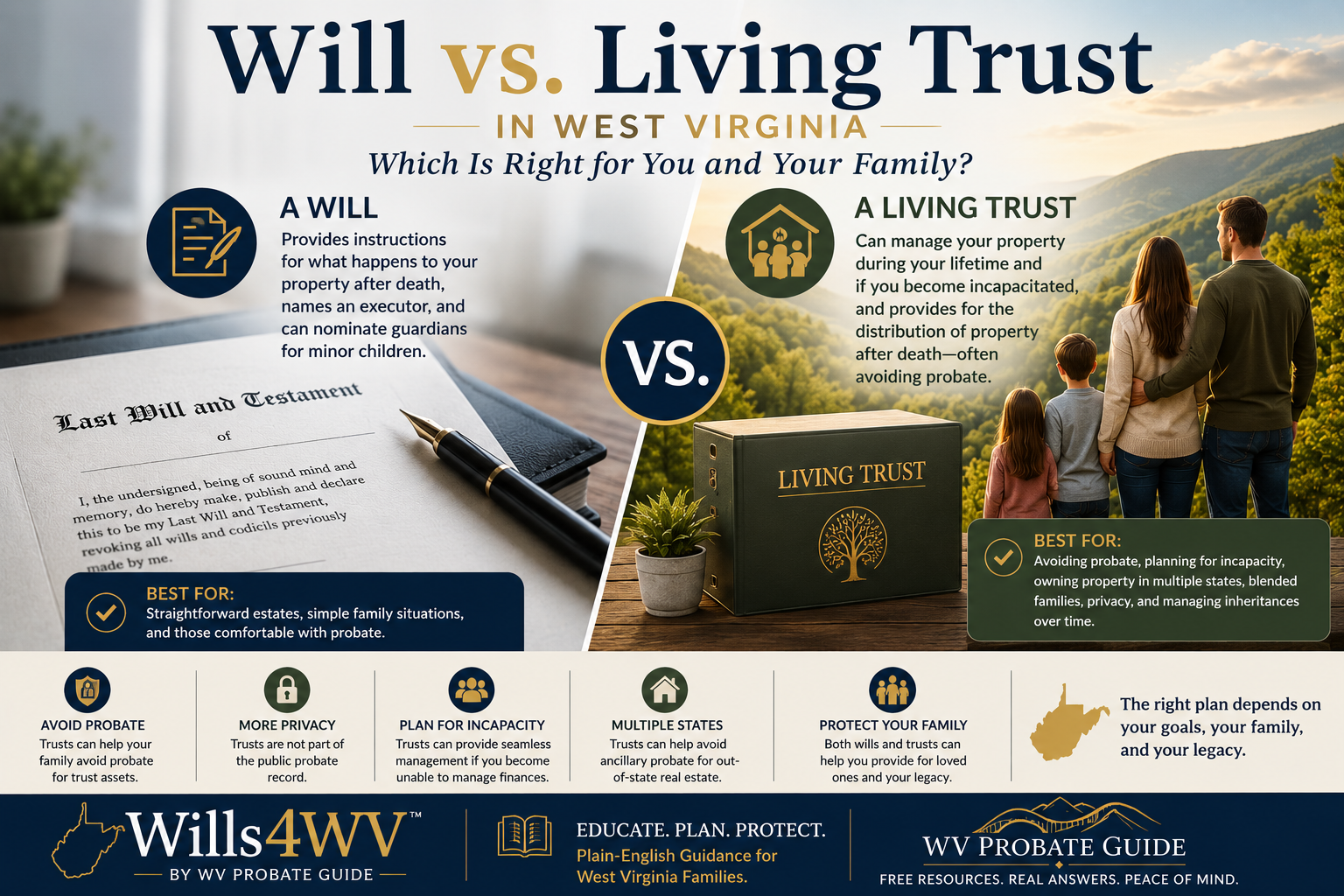
Will vs. Living Trust in West Virginia: Which Is Right for You?
Should you use a will or living trust in West Virginia? This plain-English guide explains how each works, when probate may be required, how a living trust can help with incapacity and privacy, and what West Virginia families should consider when choosing an estate plan.

Will vs. Living Trust in West Virginia: Which Is Right for You?
Should you create a will or living trust in West Virginia? Learn how wills and revocable living trusts differ, which assets may avoid probate, when a trust may be worth considering, and how to choose an estate plan based on your family and goals.